If you are considering CandidPro® Clear Aligners but already have crowns or fillings, you may wonder whether previous dental work will prevent you from straightening your teeth.
In many cases, existing restorations do not automatically rule out clear aligner treatment. What matters is the condition of the restored teeth, the health of your gums, your bite, the movements being planned, and whether additional dental work may be needed.
At Northside Family Dentistry, orthodontic planning begins with a comprehensive look at your oral health rather than focusing only on tooth alignment. Your crowns, fillings, dental history, and treatment goals all become part of that evaluation.
Can You Get Clear Aligners With Crowns or Fillings?
Yes, having dental crowns or fillings does not automatically mean CandidPro® Clear Aligners are unavailable to you.
A crown restores a damaged or weakened tooth, while a filling replaces an area of tooth structure affected by decay or damage. Both types of restorations can be present in adults who are interested in orthodontic treatment.
Before recommending clear aligners, your dental team may consider:
- Where the restorations are located
- Whether they are stable and functioning properly
- The health of the teeth underneath or around them
- Whether there is active decay
- The condition of your gums
- How much tooth movement is needed
- How your upper and lower teeth fit together
- Whether additional restorative treatment is anticipated
A small, stable filling may require little additional consideration. A damaged crown or filling, active decay, or another unresolved concern may need attention before orthodontic treatment proceeds.
The presence of dental work is therefore only one part of the decision.
Why Your Oral Health Matters Before Treatment
Clear aligner treatment is about more than making teeth look straighter.
Before tooth movement begins, your dentist should consider the overall health of your teeth and gums. Problems such as untreated decay, damaged restorations, or periodontal concerns may need to be addressed so orthodontic treatment begins on a healthier foundation.
An evaluation may look for:
- Active cavities
- Damaged or loose restorations
- Gum inflammation
- Periodontal concerns
- Tooth sensitivity or discomfort
- Existing crowns, fillings, bridges, or implants
- Other dental work that could affect treatment planning
Northside Family Dentistry provides preventive, restorative, and orthodontic care within one family dental practice. This makes it possible to consider these needs together rather than treating tooth alignment as separate from the rest of your oral health.
Will Your Crown or Filling Need Treatment First?
Not necessarily.
A crown or filling should not be replaced simply because you are interested in CandidPro® Clear Aligners. What matters is whether the restoration is healthy and how it fits into the overall treatment plan.
Additional restorative care may be recommended if a crown or filling is:
- Loose
- Cracked or otherwise damaged
- Worn
- Associated with new decay
- No longer functioning properly
- Likely to interfere with the planned treatment
A healthy restoration may remain in place throughout orthodontic treatment.
Treatment order can also vary. Some restorative needs may be addressed before tooth movement begins. Other dental work may be easier to plan after the teeth have reached their intended positions.
The appropriate sequence depends on your individual oral health and treatment goals rather than following the same order for every patient.
What If You Need Dental Work During Clear Aligner Treatment?
Dental needs can change while you are wearing aligners.
If a filling breaks, decay develops, or another problem appears during treatment, you should still have it evaluated. Restorative care should not automatically be postponed simply because orthodontic treatment is underway.
Because clear aligners are designed to fit closely over the teeth, changing the shape of a tooth may affect how an aligner fits. Your dental team can determine how necessary dental work should be coordinated with the orthodontic plan.
Let your dentist know if you notice:
- New tooth sensitivity
- Pain when chewing
- A rough or damaged filling
- A loose crown
- Changes in how an aligner fits
- Other new dental concerns
Restorative and orthodontic care should support the same goal: maintaining your overall oral health while moving toward the desired tooth position and bite.
What If the Crown Is on a Dental Implant?
A crown placed over a natural tooth is different from an implant-supported crown.
A natural tooth covered by a crown may still be considered for orthodontic movement. A dental implant, however, is fixed in the jawbone and does not move in the same way as a natural tooth during orthodontic treatment.
If you already have a dental implant, its location may affect how surrounding natural teeth can be moved and how the overall treatment plan is developed.
This distinction is important because patients may refer to both restorations simply as a crown.
Let your dental team know about any implants or other restorative work during your evaluation so the plan can account for them from the beginning.
How Are Restorative and Orthodontic Care Coordinated?
Adults considering orthodontic treatment may have dental work completed over many years. Crowns, fillings, missing teeth, implants, and future restorative needs can all affect planning.
Your dental team may consider:
- Which teeth have restorations
- Whether those restorations are stable
- Whether future dental work is expected
- Which teeth need to move
- How tooth movement may affect your bite
- Whether restorative treatment should happen before or after alignment
For example, a damaged filling may need attention before aligner treatment begins. In another situation, a future crown or other restoration may be planned after tooth positions have changed.
The goal is not to treat orthodontics and restorative dentistry as separate projects. A thoughtful plan considers how each part of your care affects the others.
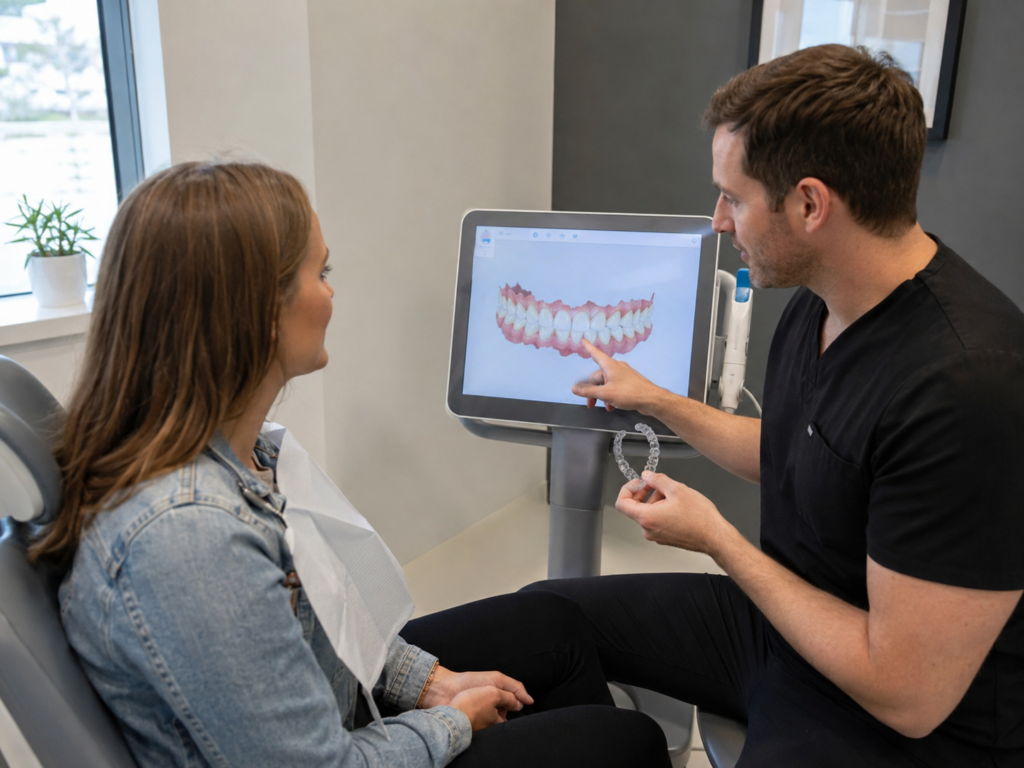
How Will Your Dentist Decide If CandidPro® Is a Good Fit?
CandidPro® Clear Aligners are one orthodontic option available at Northside Family Dentistry.
Your evaluation may consider:
- Current tooth alignment
- Your bite
- The health of your teeth and gums
- Existing crowns and fillings
- Missing teeth or implants
- The amount and type of tooth movement needed
- Future restorative needs
- Your dental history
- Your treatment goals
Having crowns or fillings does not automatically qualify you for clear aligners, just as it does not automatically disqualify you.
If CandidPro® is not the best fit, traditional or ceramic braces may also be considered depending on your individual needs.
If you feel uncertain or anxious about orthodontic treatment, let the dental team know. Asking questions about why a particular approach is recommended can help you feel more informed and involved in the decision.
Keep Up With Dental Care During Treatment
Starting clear aligner treatment does not replace routine preventive care.
Your teeth and gums still need to be monitored during orthodontic treatment, particularly if you already have crowns, fillings, or a history of restorative dental work.
Continue following the recommended schedule for dental exams and cleanings and let your dental team know about any new sensitivity, discomfort, restoration problems, or changes in how your aligners fit.
Clear aligners are removable, which allows you to take them out for eating and oral hygiene. Maintaining healthy teeth and gums remains an important part of the treatment process.
Existing Dental Work Does Not Automatically Rule Out Clear Aligners
If you already have crowns or fillings, you should not assume that CandidPro® Clear Aligners are unavailable to you.
Existing dental work simply adds factors that need to be considered during treatment planning. The condition of your restorations, your gum health, bite, required tooth movement, future dental needs, and treatment goals all help determine which orthodontic approach may be appropriate.
Northside Family Dentistry provides orthodontic care alongside preventive and restorative dentistry, allowing the team to evaluate how each part of your oral health fits into the treatment plan.
If you are interested in straightening your teeth but already have crowns, fillings, or other dental work, contact Northside Family Dentistry to schedule an evaluation and discuss which options may fit your needs.